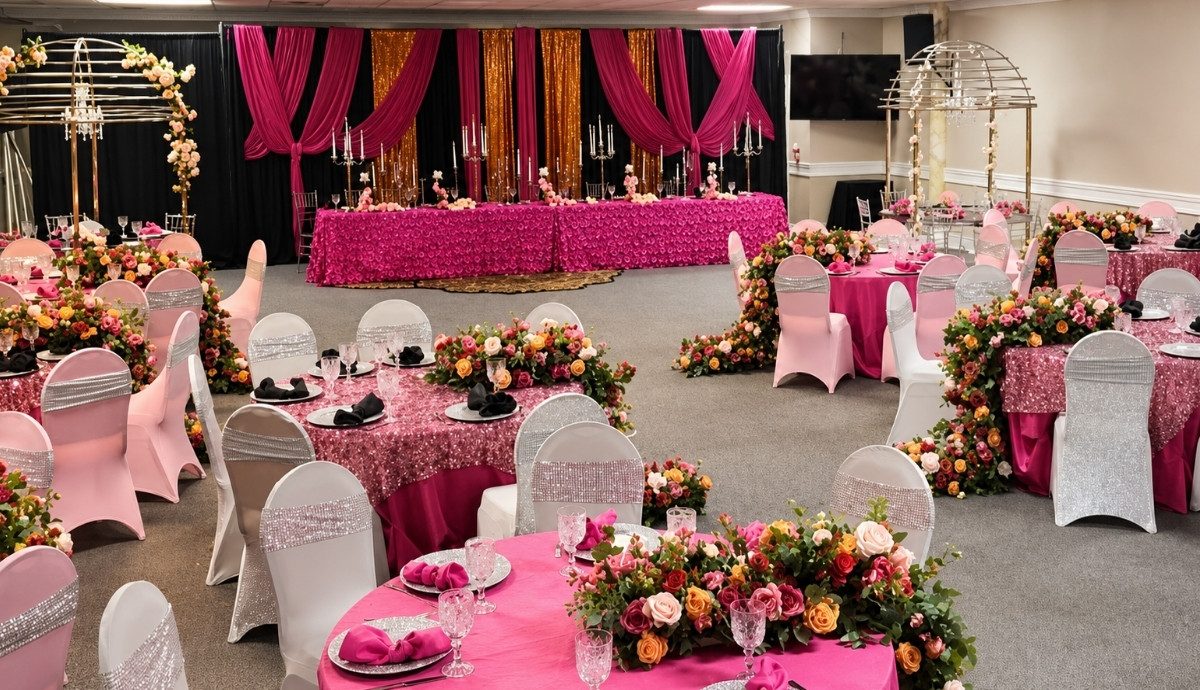
Few celebrations have been more thoroughly over-decorated than the gender reveal. Twelve shades of pink, twelve shades of blue, a cake, a confetti cannon, and a guest list that quietly wishes they had stayed home. We design ours the opposite way — atmosphere first, palette second, and the reveal itself as the final, intimate beat of an event that was beautiful long before it.
Choose atmosphere over theme
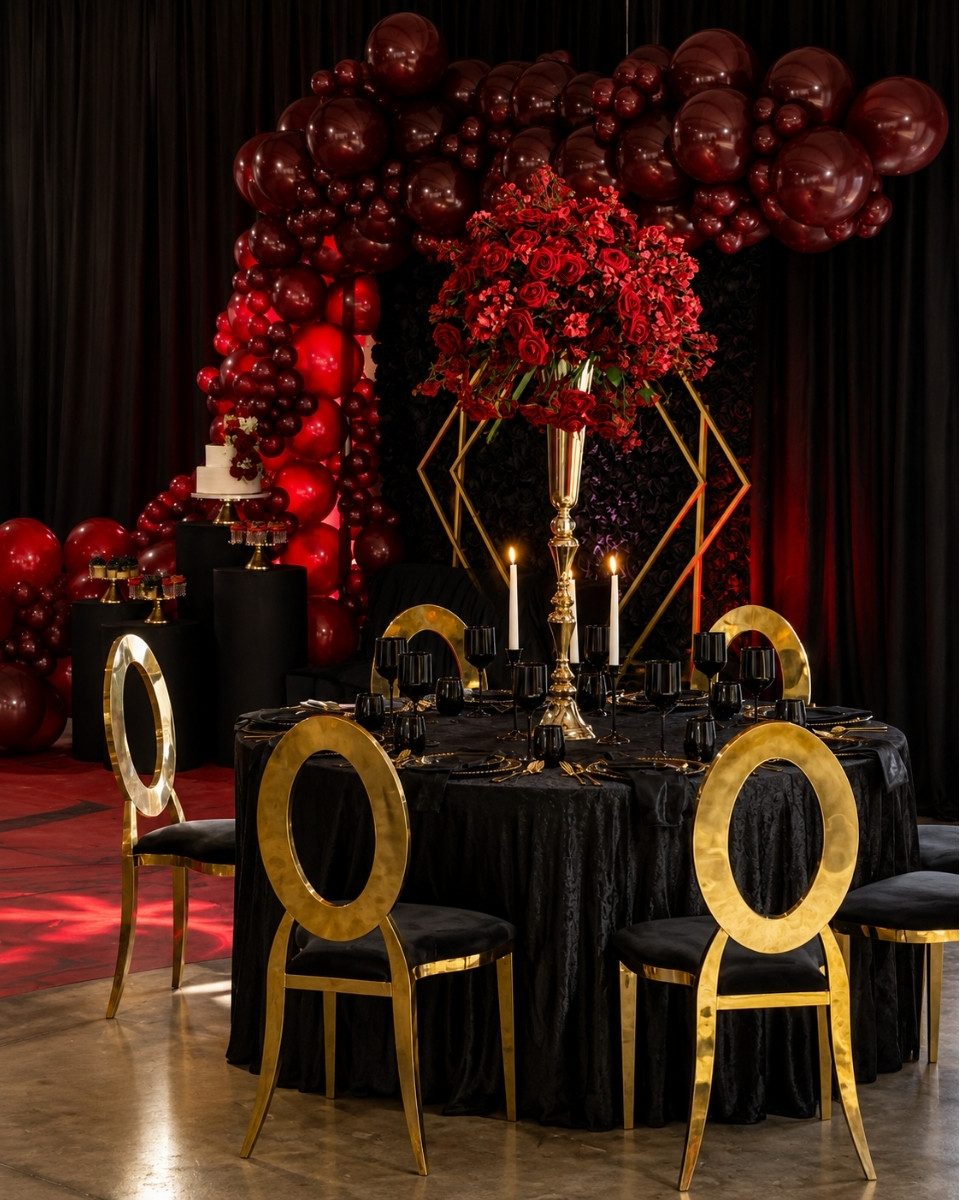
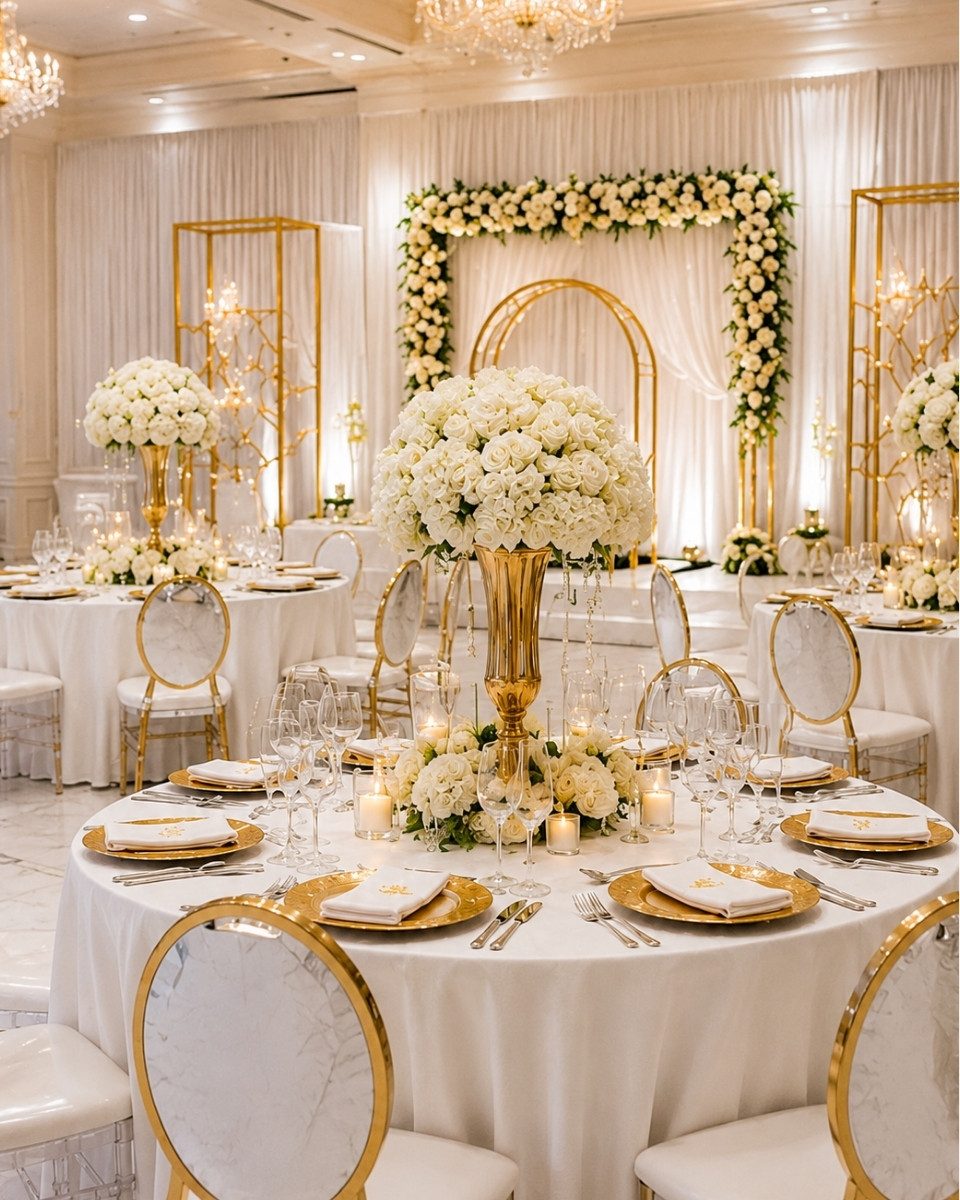
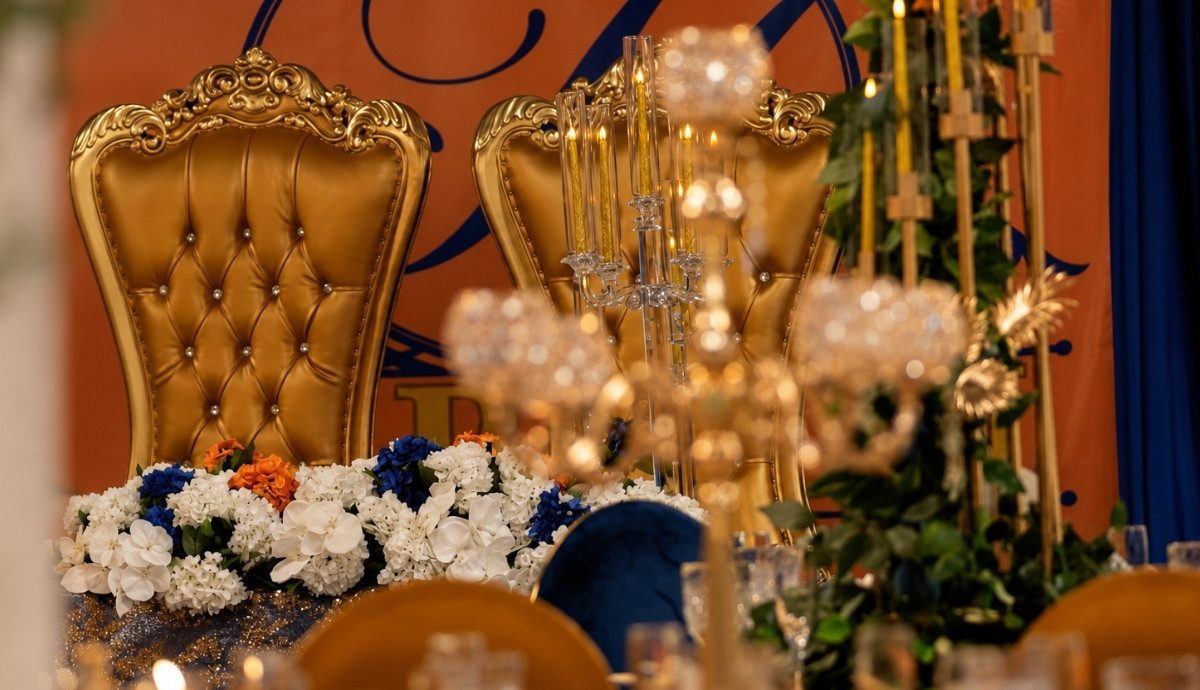
The room should feel like a quiet dinner party with one extraordinary moment held at its centre. Warm, low lighting; tonal florals; a tablescape worth lingering at; music chosen with the same care as the menu. When the room is right, the reveal does not need to shout to land.
Build a sophisticated neutral palette
Ivory, mushroom, champagne, the softest dusty rose, the palest sky. The reveal moment can carry a single saturated note — pale powder pink or cornflower blue, expressed through one element only — but the room around it stays restrained. The contrast between neutral and reveal is the drama.
“The most emotional reveals we have designed had almost no pink or blue in the room — until the moment they did.”
Use balloons as sculpture
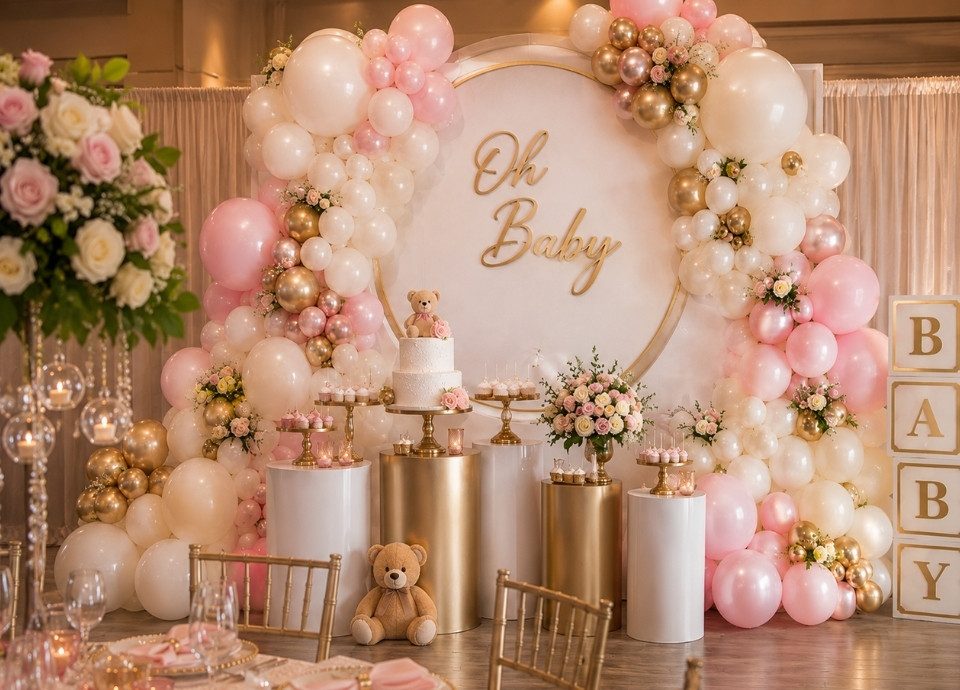
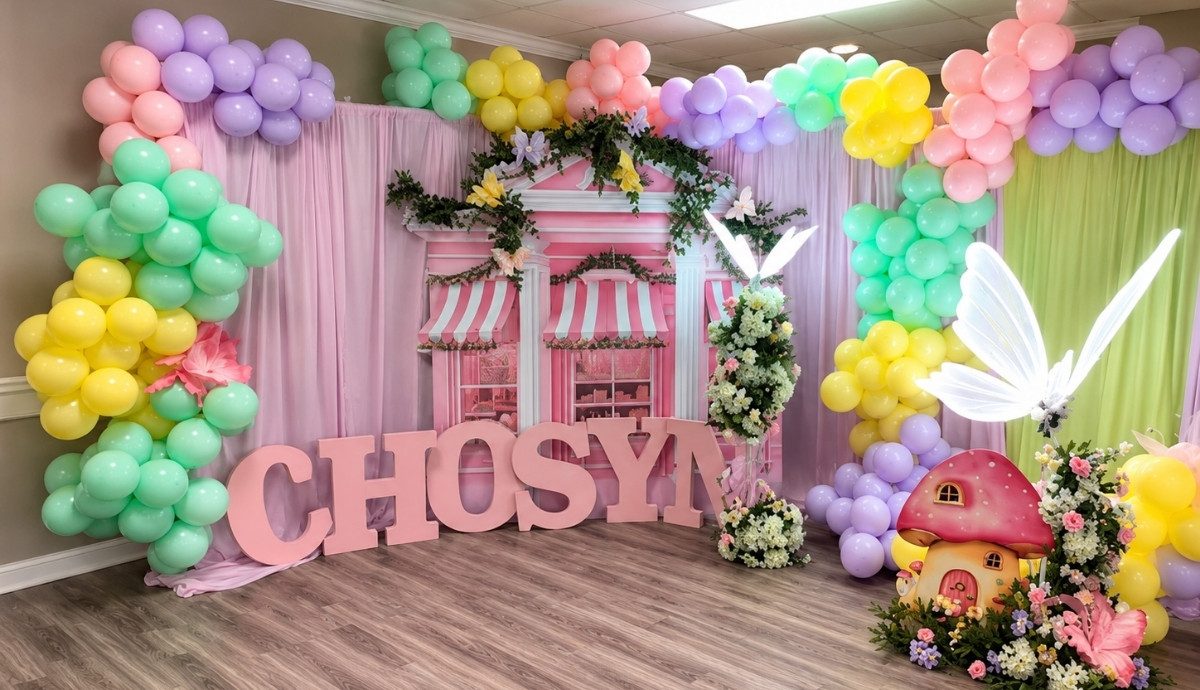
A single sculptural balloon moment — a tonal ceiling cloud above the reveal, or a quiet ivory column flanking the parents' seats — is more powerful than an archway in primary colours. The reveal element itself can be a single oversized confetti balloon, beautifully suspended, lit from above.
Light it cinematically
- Dim the overheads almost to off; let candlelight carry the room
- Pin-spot the reveal moment so the eye knows where to land
- Schedule the reveal for golden hour where the venue allows
- Brief the photographer for portraits before the reveal, not only after
Design the emotional arc
An immersive reveal is paced like a piece of music. A long, slow welcome. A seated dinner where the parents are toasted. A pause. A single sculpted moment, beautifully lit, that lets the room cry in unison. The pink-or-blue is incidental. The feeling is the point.
A reveal that prioritises atmosphere over theme stops being a party and starts being a portrait — of two people, one moment, and the room that held them.